
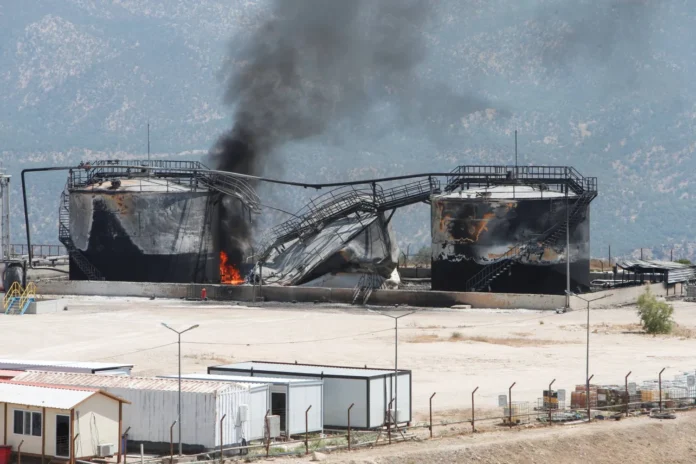
Recent drone strikes on Kurdistan oil fields have sparked concern not only in Iraq but across the Gulf region. Between July 14 and 16, unknown groups targeted five oil installations in northern Iraq, severely damaging production capacity. The attacks cut nearly 70% of the region’s oil output.
The strikes occurred amid an ongoing dispute between Baghdad and Erbil over oil revenues. Since May, the Iraqi government has withheld public sector salaries from the Kurdistan Regional Government. This funding freeze has left thousands of workers, including teachers and doctors, without income.
The damage to Kurdistan oil fields also directly affects energy stability in Iraq. Around 220,000 barrels per day went offline, reducing output at a critical time. These disruptions pose risks for energy-dependent public services such as electricity and healthcare.
In response, Baghdad and Erbil reached a temporary agreement on July 17. This deal allows partial salary payments and the resumption of oil exports. However, only May salaries have been disbursed so far. June and July payments remain delayed.
Prolonged salary freezes have severely affected essential services. In late 2023, 60,000 teachers went on strike for six months, disrupting education for over 700,000 students. Health workers also reduced operations to emergency-only services due to nonpayment.
The threat extends beyond Iraq. Energy analysts in the Gulf worry that repeated strikes on Kurdistan oil fields may trigger regional instability. The Khor Mor gas field, vital to Kurdistan’s electricity supply, has been targeted nine times since 2023. It supplies feedstock to many power plants, and any disruption threatens electricity access across the region.
Gulf governments have remained cautious, but some quietly expressed concern over escalating tensions. Many rely on stable Iraqi output to maintain market balance, particularly amid ongoing shifts in global energy supply.
The Iraqi and Kurdish authorities must act quickly. Investigations into these attacks must be transparent and results made public. Protecting energy infrastructure and resuming salary payments are essential steps.
The situation in the Kurdistan region serves as a warning to neighboring countries. Energy infrastructure remains a prime target in regional power struggles, and the Gulf cannot afford to ignore its ripple effects.
