
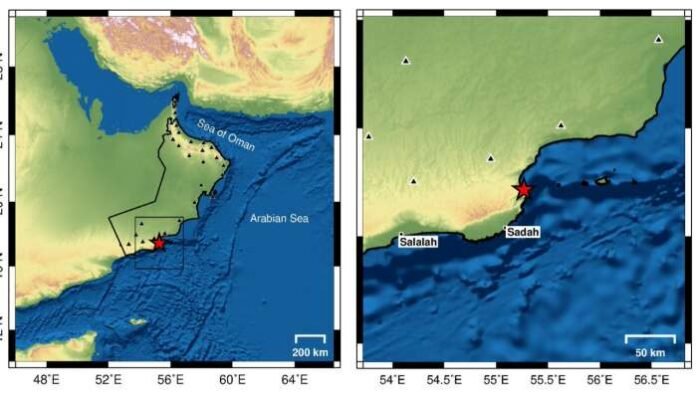
A minor Dhofar earthquake recorded on Sunday morning measured 2.3 magnitude on the Richter scale. The Earthquake Monitoring Centre at Sultan Qaboos University detected seismic activity within Sadah Wilayat. Furthermore, specialized monitoring equipment registered the shallow tremor at approximately 9:57 AM local time. Consequently, seismic experts immediately analyzed geological data to determine the precise epicenter and potential regional effects.
Seismologists confirmed that the minor tremor occurred at a shallow depth of approximately two kilometers. Furthermore, automated tracking stations registered the exact epicenter 133 kilometers distant from the coastal city of Salalah. Local emergency management authorities reported no initial structural damage or injuries following the brief seismic event. Therefore, public safety officials reassured residents across the southern governorate that normal daily activities could continue.
Regional monitoring stations continuously track minor fault line movements across southern Omani governorates using advanced technology. Furthermore, geological experts categorize low-magnitude tremors beneath magnitude three as minor events rarely causing structural harm. Local authorities maintain detailed seismic records to monitor tectonic stability and improve long-term emergency response strategies. Consequently, regular geological data collection helps scientists understand regional crustal shifts and tectonic fault line behaviors better.
Emergency services remain vigilant while monitoring regional geological activity through official university data feeds and sensors. Furthermore, public safety agencies encourage residents to stay informed through official government communications regarding natural events. Technical teams will continue reviewing recorded seismic waves to gather additional geological data regarding southern Omani fault structures. Ultimately, the Dhofar earthquake recorded on Sunday highlights ongoing natural geological monitoring across the Sultanate.
