
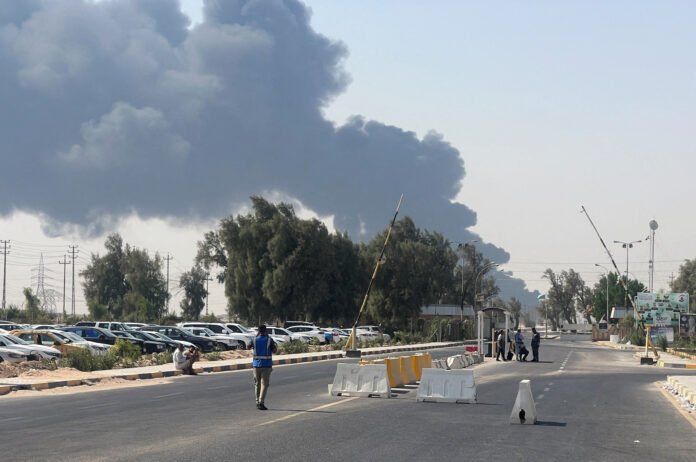
A deadly gas leak occurred at a factory in northeastern Iraq, killing two workers and injuring three others. Consequently, civil defense teams rushed to the site and rescued 19 people. Emergency crews worked quickly to secure the area and prevent further exposure. Therefore, the Iraq factory gas leak drew immediate attention from authorities.
Officials reported that the leak involved ammonia gas, a highly toxic substance. Workers at the site struggled to evacuate safely during the sudden release. Meanwhile, nearby personnel received first aid and were transported to local hospitals. In addition, safety officers cordoned off the affected area to prevent additional harm.
The injured workers remain under close medical observation. Doctors continue monitoring their condition to ensure no long-term effects. At the same time, emergency teams provided protective equipment to first responders. Thus, authorities managed the Iraq factory gas leak with coordinated action.
Security and safety officials launched a full investigation to determine the cause of the incident. They are examining machinery, chemical storage, and workplace procedures. Moreover, officials are interviewing employees and reviewing safety logs. Consequently, authorities aim to prevent future accidents and enforce stricter compliance.
Local leaders emphasized the importance of workplace safety and emergency preparedness. They instructed factories handling hazardous materials to review protocols immediately. Furthermore, safety inspections across industrial zones have increased after the incident. Therefore, the gas leak serves as a reminder of industrial risks.
Civil defense authorities praised first responders for their quick and coordinated efforts. Firefighters and medical teams acted under challenging conditions to save lives. In addition, they ensured no additional workers suffered exposure. As a result, the combined response reduced potential casualties.
Industry experts called for stronger safety standards in chemical plants. They highlighted the need for regular audits, proper ventilation, and employee training. Moreover, the government plans to review emergency response plans nationwide. Thus, the Iraq factory gas leak underscores the urgency of industrial safety reforms.
Meanwhile, investigations continue, and authorities have warned nearby communities to remain cautious. They also plan to issue new guidelines for hazardous material handling. Furthermore, factory management faces legal scrutiny for potential negligence. Consequently, the Iraq factory gas leak will influence safety regulations moving forward.
Overall, the incident has highlighted both immediate risks and long-term preventive needs. Emergency services, hospital staff, and safety officers coordinated effectively. Additionally, leadership emphasized learning from the incident to strengthen workplace safety. Therefore, the Iraq factory gas leak remains a top priority for authorities.
