
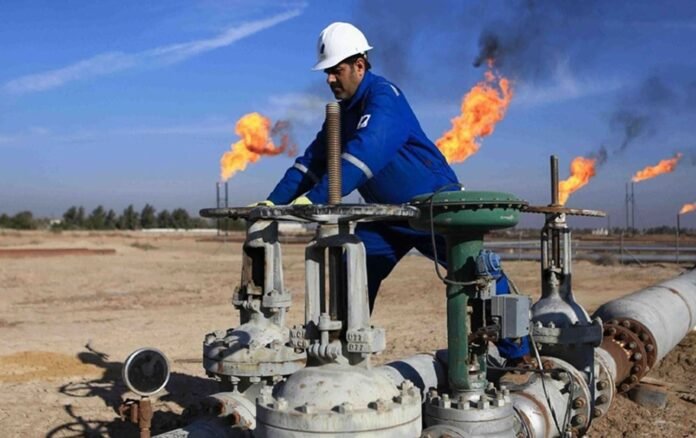
Basra oil drop has reached critical levels as Iraq’s southern oil fields sharply declined production. Experts warn that the Basra oil drop threatens the nation’s financial stability during ongoing regional unrest. Officials report that security concerns and logistical challenges directly impacted oil output across southern Iraq recently.
Kazem Karim, deputy director for field and license affairs, confirmed that daily production now averages only 1.3 million barrels. Previously, the southern fields supplied roughly 3.3 million barrels each day before regional tensions escalated. This dramatic decline reflects both safety precautions and operational limitations affecting Iraq’s oil industry nationwide.
The drop in production coincides with heightened military tensions between the United States, Israel, and Iran across the Gulf region. Iranian retaliatory strikes targeted multiple locations in Iraq, the Kurdistan Region, and neighboring countries simultaneously. These attacks primarily aimed at US-affiliated installations while inadvertently affecting civilian infrastructure and transport networks near oil facilities.
Karim emphasized that Basra’s major export terminals, including Umm Qasr and Basra Oil Port, remain fully functional for tanker operations. However, exports now heavily rely on available ships and the security of shipping routes across the Persian Gulf. Analysts suggest that such vulnerabilities could further complicate Iraq’s oil revenue and economic stability during the current crisis.
The Islamic Revolutionary Guard Corps announced Monday that the Strait of Hormuz will remain closed, threatening vessels entering the area immediately. Economists warn that this closure could reduce Iraq’s monthly oil revenue from seven billion dollars to just one billion. The resulting fiscal strain poses serious challenges to government spending and regional economic activity.
Despite these pressures, Karim noted that foreign personnel temporarily relocated to Gulf countries have maintained coordination with local teams. Oil fields like Zubair and Rumaila continue production with careful collaboration between domestic and international experts. Operations proceed under strict security measures to prevent further disruptions during the conflict escalation.
Observers highlight that the Basra oil drop exposes critical weaknesses in Iraq’s energy infrastructure and supply chains. If hostilities persist, prolonged interruptions could destabilize Iraq’s finances and disrupt regional trade networks. Analysts warn that addressing both security risks and logistical constraints remains crucial for sustaining production levels.
Basra oil drop underscores the wider consequences of Gulf tensions, illustrating the direct link between military activity and Iraq’s economic vulnerability. International monitoring agencies stress that a stable oil sector is essential for mitigating financial losses and ensuring long-term national stability.
