
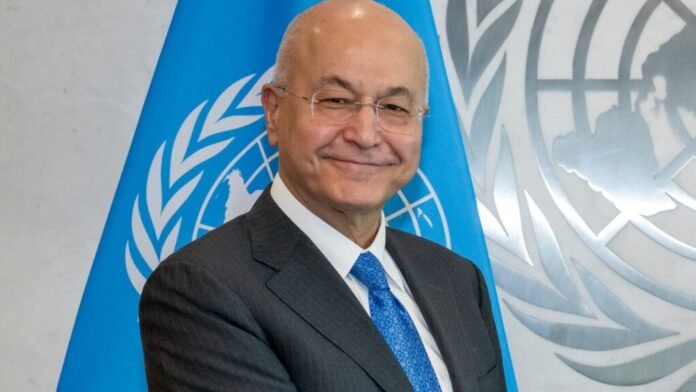
Barham Salih, Iraq’s former president, has begun his tenure as United Nations High Commissioner for Refugees (UNHCR). He chose Kenya for his first official visit, demonstrating his commitment to helping refugees transition from aid dependency to self-reliance. This approach guides his leadership and sets a clear humanitarian agenda.
During the visit, Salih praised Kenya’s efforts to integrate refugees. He highlighted that refugees access healthcare, education, and economic opportunities. Salih emphasized that these programs allow refugees to contribute to local communities and strengthen society. However, he warned that Kenya cannot carry this responsibility alone and called for increased international support.
Salih assumed office on January 1, 2026, after decades of political and humanitarian experience. On December 18, the UN General Assembly elected him UNHCR chief. He became the first person from the Middle East to lead the agency since the late 1970s. He began his five-year term immediately.
Salih’s personal experience as a former refugee shapes his leadership. Born in Sulaimani on September 12, 1960, he endured persecution under Iraq’s former Baath regime. Arrested twice as a teenager due to his links to the Kurdish national movement, Salih spent time in detention before fleeing to the United Kingdom. This history fuels his commitment to improving refugee lives worldwide.
In Kenya, Salih visited the Dadaab and Kakuma camps, which host over 850,000 refugees from Somalia and South Sudan. He criticized funding cuts that have worsened living conditions, reduced food aid, and increased malnutrition. He described Kenya’s response as commendable and said it provides valuable lessons on enabling refugees to gain independence.
Salih stressed the importance of empowering refugees while encouraging global cooperation. His vision focuses on practical support, advocacy, and promoting self-reliance. By prioritizing these efforts, he aims to transform lives and strengthen humanitarian responses worldwide.
