
Bahrain’s labor market stands at a critical turning point amid economic and technological change. From the outset, labor market digital transformation in Bahrain defines debates about jobs, skills, and long-term stability. Moreover, economic diversification continues to reshape employment patterns across sectors.
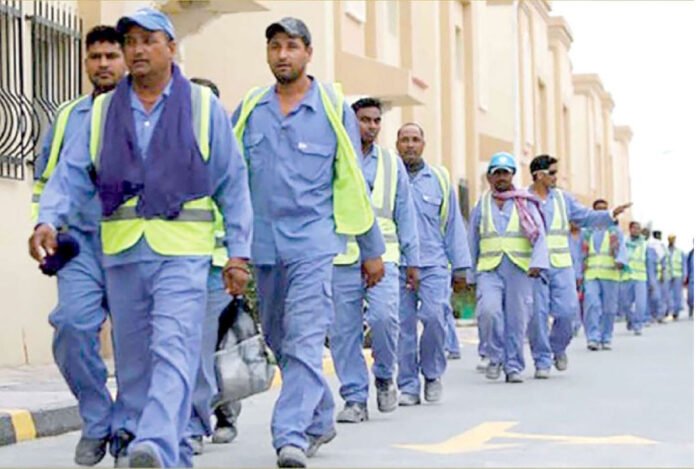
Commercial, construction, real estate, and restaurant activities remain the largest job creators nationwide. However, these sectors mostly generate low- and medium-skilled positions. Consequently, employers often depend on low-cost foreign labor to fill vacancies.
Official data highlights this imbalance clearly. During the second quarter of 2024, authorities issued more than 41,000 new work permits. Meanwhile, contracting and construction activities accounted for nearly a quarter of those permits.
Commercial activities followed closely, while accommodation and food services ranked third. Therefore, labor growth continues to concentrate in traditional, low-wage sectors. In contrast, high-value industries create fewer opportunities overall.
Financial services and telecommunications offer better wages and skill-based roles for nationals. However, these sectors show signs of saturation. For example, financial sector employment reached about 15,000 by late 2025.
This growth rate remains modest compared to earlier years. Additionally, bank mergers reduced expansion opportunities. As a result, these sectors cannot absorb rising numbers of job seekers.
Foreign workers continue to dominate Bahrain’s labor market. They represent more than 80 percent of total employment, especially in lower-paying roles. Furthermore, most foreign workers earn wages below average national income levels.
At the same time, more than 60 percent of Bahraini job seekers hold university degrees. This mismatch weakens employment outcomes. Consequently, many graduates struggle to find suitable roles aligned with their education.
Unemployment remains a persistent concern. Estimates suggest around 17,000 nationals remain without work. Meanwhile, hiring rates for Bahrainis show limited improvement despite policy interventions.
Temporary wage support programs initially boosted employment figures. However, their expiration exposed structural weaknesses. Some firms replaced workers instead of creating sustainable employment pathways.
Labor regulations also influence hiring behavior. Flexible visa schemes continue to lower recruitment costs for employers. Therefore, foreign labor often remains the preferred option.
Wage levels further complicate the situation. Around 60 percent of private-sector Bahrainis earn less than 600 dinars monthly. As living costs rise, this gap pressures household stability.
Education systems face growing criticism as well. Academic programs struggle to align with labor market needs. In particular, digital, analytical, and technical skills remain underrepresented.
Students increasingly seek practical training and technical careers. This shift reflects changing labor demands. However, institutions still adapt slowly to these preferences.
Digital technologies now reshape job structures across industries. Artificial intelligence, automation, and robotics already perform many routine tasks. Consequently, labor market digital transformation in Bahrain accelerates workforce disruption.
Economic diversification efforts began early due to limited oil resources. Today, oil contributes less than 15 percent of national output. Nevertheless, non-oil sectors still rely heavily on foreign labor.
Small and micro enterprises dominate more than 95 percent of non-oil activities. As a result, job quality and wage growth remain limited. This structure reinforces existing employment challenges.
Experts identify three main pressures shaping the labor market. These include economic structure, supply and demand forces, and rapid digital change. Together, they redefine employment expectations.
Looking ahead, policymakers emphasize reform and adaptation. Education alignment, wage sustainability, and productivity improvements remain priorities. Ultimately, labor market digital transformation in Bahrain will determine future economic resilience.
