
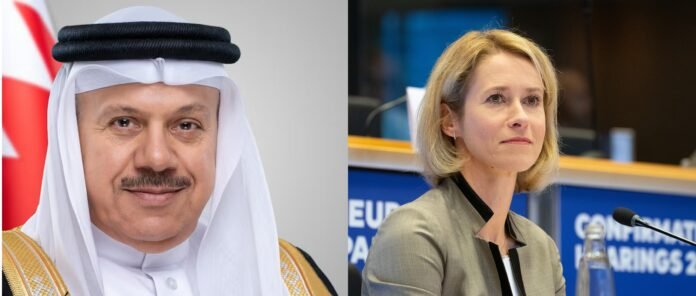
Bahrain EU relations gained fresh momentum after a high-level phone call between key officials. The discussion focused on strengthening cooperation and addressing urgent regional challenges.
During the call, Abdul Latif bin Rashid Al Zayani connected with Kaja Kallas to review ongoing partnerships. Both sides explored ways to deepen collaboration across several sectors.
Bahrain EU relations continue to expand through shared political and economic interests. Officials highlighted the importance of maintaining strong communication channels. They also agreed that cooperation supports stability and long-term development.
In addition, both parties exchanged views on key international issues. They discussed regional developments and the growing security concerns in the Gulf. These discussions reflected the need for coordinated responses to evolving challenges.
Meanwhile, the conversation addressed tensions linked to Iran and its actions in the region. Officials pointed out the risks such actions pose to stability. They emphasized that continued dialogue remains essential to reduce escalation.
The discussion covered the situation surrounding the Strait of Hormuz. This route plays a vital role in global trade and energy transport. Any disruption there affects international markets and economic security.
Therefore, both sides stressed the importance of protecting freedom of navigation. They agreed that stable energy flows remain critical for the global economy. As a result, cooperation between Bahrain and the European Union becomes even more significant.
Bahrain EU relations also reflect a broader commitment to joint action. Officials confirmed their intention to continue consultations on regional matters. They believe that cooperation enhances both regional and international security.
At the same time, the call reinforced the value of diplomatic engagement. It showed that dialogue can address complex geopolitical issues effectively. This approach helps build trust and mutual understanding between partners.
Bahrain EU relations stand at an important stage of development. Both sides aim to strengthen ties while addressing regional risks. Through continued coordination, they seek to promote stability and shared prosperity.
