
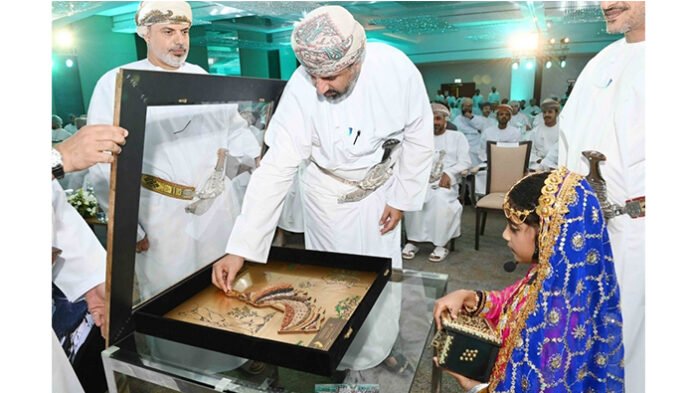
The Plant Oman initiative launched Sunday to expand vegetation and restore natural habitats across the country. Meanwhile, the Environment Authority says the program will coordinate government, business, academic and community efforts through 2040.
The launch took place under the patronage of Labour Minister Dr. Mahad Said Ba’owain. Project manager Dr. Mohammed Rashid Al Maamari said the initiative aims to grow productive vegetation while protecting water resources and strengthening food security.
The program follows three strategic tracks: environment and biodiversity, food security, and climate action. Together, these priorities guide work on native tree planting, coastal restoration and sustainable urban development.
Eight national programs will turn those priorities into practical projects. They cover ecosystem restoration, sustainable afforestation, fruit-bearing crops, mangrove recovery, green investment, natural resource management, sustainable cities, governance and public awareness.
For example, some programs will promote native tree planting, habitat recovery and measures against desertification. At the same time, food-focused projects will expand fruit trees and crops with nutritional and economic value.
The climate track will encourage nature-based methods to absorb carbon and address climate impacts. In addition, it includes coastal ecosystem protection and mangrove development.
Projects will span Oman’s governorates while taking local environmental conditions into account. Accordingly, the authority plans to improve water, soil and land use while encouraging treated-water irrigation and investment.
A national environmental intelligence platform will support planning and oversight. It will combine geographic information systems, satellite imagery, remote sensing and artificial intelligence to organize information on vegetation, biodiversity, soil, water and carbon.
Consequently, officials can compare results across governorates and monitor progress. The initiative will also measure more than the number of trees planted or land cultivated.
For instance, teams will check tree survival and growth 36 months after planting. They will also track water efficiency, soil quality, habitat restoration and biodiversity.
Other measures will cover food production, investment, partnerships and community involvement. Together, these indicators connect environmental work with economic and social outcomes.
The initiative’s governance structure includes a steering committee, a central implementation team and specialist program groups. Meanwhile, coordination across governorates should clarify responsibilities and connect participating organizations.
The Environment Authority expects the work to create investment opportunities while improving resource management. It also aims to strengthen food security and support Oman’s contribution to climate and biodiversity efforts.
Finally, the Plant Oman initiative calls on government agencies, businesses, researchers and communities to share responsibility for lasting results. Its goal extends beyond adding green spaces to conserving resources for future generations.