
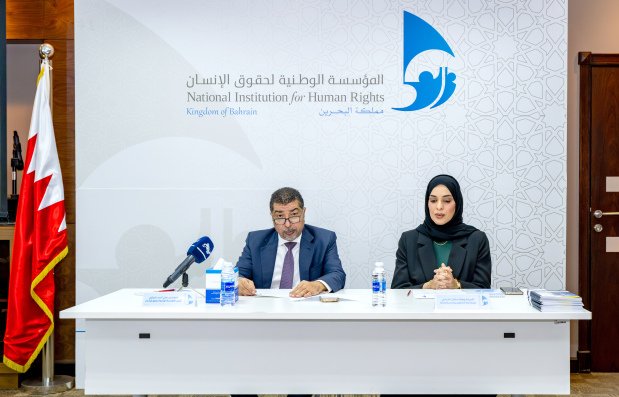
NIHR strategy for 2027–2030 sets four priorities for Bahrain’s National Institution for Human Rights over the next four years. Officials presented the plan at the institution’s headquarters in Seef.
Chairman Ali Ahmed Al Derazi said the plan would guide the institution’s work while building on earlier efforts. Committee chair Rawdha Salman Al Aradi outlined the four objectives and described their main areas of focus.
The first priority aims to strengthen understanding of human rights and build partnerships across Bahrain. It also calls for developing institutional capacity, particularly among law enforcement, correctional services and organizations that protect rights and freedoms.
The second objective focuses on civil society groups. It aims to strengthen their ability to monitor rights issues, prepare reports and engage with regional and international human rights mechanisms. In addition, the plan highlights digital rights and personal data protection.
The strategy also addresses challenges linked to cybersecurity and artificial intelligence. These issues increasingly shape how people use digital services and how institutions handle information. The plan therefore connects rights awareness with emerging technology concerns.
A third priority focuses on groups that may need additional protection. It names women, older people, people with disabilities and migrant workers. The institution plans to monitor the challenges they face and support improvements in national practices.
The fourth objective centers on children’s rights. It aims to support children’s participation in national and international settings, while protecting them from violence, exploitation and abuse.
The new plan will guide the institution from 2027 through 2030. However, officials have not provided a detailed timeline, budget or public measures for assessing progress against each objective.
Alongside these priorities, the institution expects to continue its statutory work. That includes receiving complaints, monitoring rights issues, conducting field visits and submitting recommendations to relevant authorities.
The plan links public awareness, stronger partnerships and institutional skills with protections for specific groups. It also gives digital rights and child protection clear places among the stated priorities.
NIHR strategy identifies broad areas for the institution’s next phase, while leaving operational details to follow. Officials have not yet outlined specific programmes or deadlines for each objective.