
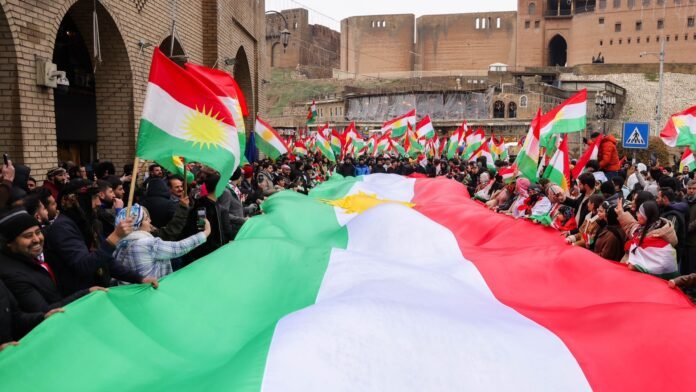
Erbil protest brought hundreds of people to the area near the historic citadel on Thursday. Demonstrators objected to recent federal government decisions affecting the Kurdistan Region.
Participants came from different parts of society and carried banners and signs. Their slogans criticized Baghdad’s approach to the region’s rights, finances and administrative responsibilities.
The rally followed a package of measures announced Tuesday by Prime Minister Ali Al-Zaidi. The decisions came after investigations into alleged oil smuggling involving the state-run North Oil Company.
Under the new measures, Iraq’s Border Ports Authority will take control of crossings in the Kurdistan Region. In addition, crude oil and petroleum product exports will require approval from the federal Oil Ministry.
The ministry will also manage oil fields in Kirkuk, Nineveh, Saladin and Diyala, according to the announced measures. Those fields lie outside the federal government’s security control, adding another point of dispute.
The decisions touch on several areas of authority at once. Border management, export approvals and oversight of oil fields all affect how the region conducts economic and administrative affairs.
Protesters framed their opposition around what they described as the region’s rights and financial and administrative entitlements. However, the available information did not detail specific demands beyond their criticism of Baghdad’s policies.
The rally took place beside Erbil’s historic citadel, a prominent landmark in the regional capital. Organizers and authorities had not announced the size of the crowd beyond reports describing hundreds of participants.
The federal government linked its package of decisions to investigations into oil smuggling. Meanwhile, the protest showed public opposition in Erbil to the measures and their potential effects on regional administration.
The announcement did not specify how the new responsibilities would be implemented or when the changes would take effect. Nor did it describe any negotiations between Baghdad and regional officials following the decisions.
Erbil protest highlights the disagreement over federal authority and the Kurdistan Region’s claims to financial and administrative rights. Further developments may depend on how officials apply the measures and whether the two sides discuss their concerns.