
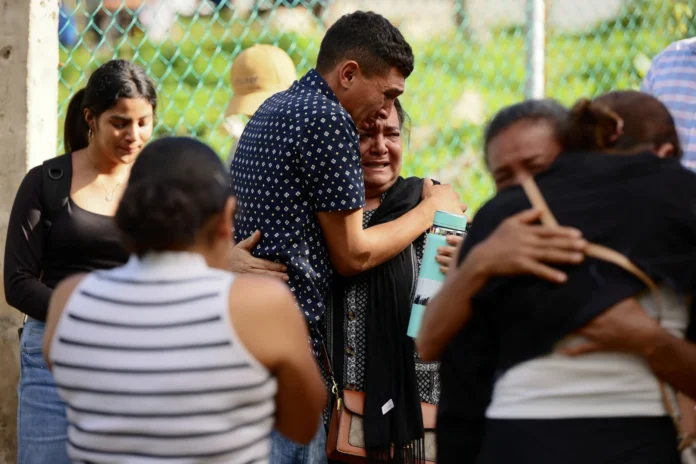
Cartagena hostages were freed early Wednesday after Colombian security forces entered a supermarket and ended a day-long siege. President Abelardo de la Espriella said the joint operation rescued everyone held inside and killed one captor.
Authorities believed about 20 people remained in the store when tactical teams moved in. Earlier, negotiators had secured the release of around 10 people from an initial group of roughly 30. The standoff lasted about 17 hours.
Several explosions sounded before officers and soldiers entered the building. A police helicopter circled above the shopping center as security forces gathered outside. Soon afterward, soldiers appeared inside the supermarket while teams secured the premises.
The president said authorities had offered the captors a chance to surrender and release those they held. He said they refused, prompting forces to act. Cartagena’s mayor reported that the rescued people were safe and would reunite with relatives before receiving medical checks.
The siege caused particular anxiety for families of supermarket employees who might have been trapped inside. One worker’s father said he could not reach his son by phone and feared the captors had taken the device. Officials did not immediately provide a full list of those rescued.
Authorities said the crisis began after an attempted robbery involving an armored vehicle at the shopping center. Local media reported that the captors demanded nearly $2 million, two armored vehicles and safe passage to Barranquilla, about 130 kilometers northeast. Those reported demands had not received independent confirmation.
De la Espriella said the incident involved criminals rather than a guerrilla or paramilitary organization. He described the suspects as people who found themselves trapped after the attempted robbery and then seized hostages. Authorities have not provided further details about the suspects or their alleged roles.
The hostage crisis unfolded amid wider security concerns across Colombia. It coincided with the tenth anniversary of the peace agreement that ended the country’s conflict with the FARC guerrillas. However, dissident factions and criminal organizations continue to compete for control in some areas.
Earlier in the week, authorities blamed a FARC dissident faction for a car bombing in Villavicencio that injured 25 people and caused extensive damage. Separately, the presidency reported an attack on electrical infrastructure that disrupted power in several southwestern departments. Officials said they were taking additional steps to protect energy facilities.
Cartagena hostages returned to their families after the operation, while investigators faced questions about the attempted robbery and the captors’ demands. The incident also drew attention to the continuing challenges authorities face in confronting organized crime.