
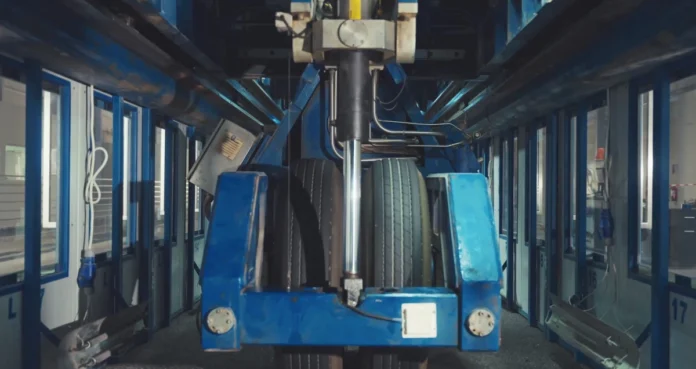
Road Durability testing in Saudi Arabia is entering a new phase through advanced technology that simulates two decades of road wear. The Roads General Authority (RGA) is using a Heavy Vehicle Simulator to examine how roads withstand demanding conditions. The system recreates long-term traffic and environmental pressures within a controlled laboratory setting.
Located at the authority’s road laboratory, the simulator applies different loads to a sample road section. It also reproduces climatic conditions, geological characteristics and construction material properties. Consequently, researchers can examine how road surfaces respond to conditions similar to decades of everyday use.
The technology allows specialists to assess infrastructure performance without waiting years for natural deterioration. In addition, the authority says faster testing can help predict road conditions before construction begins. This approach could support better planning and more efficient decisions about infrastructure spending.
According to the RGA, the system represents the first technology of its kind in the Gulf region and Middle East. Its automated loading mechanism can complete 26,000 loading cycles in both directions within 24 hours. Furthermore, computer-controlled settings allow specialists to adjust operating limits throughout the testing process.
The simulator also operates across temperatures ranging from 15 to 60 degrees Celsius. This capability allows researchers to examine how changing temperatures may affect road materials and structural performance. Therefore, testing can cover a wider range of environmental conditions.
Meanwhile, automated monitoring equipment records several measurements throughout each testing cycle. Precision sensors track temperature, pressure, stress, strain and other important performance indicators. The system continuously transfers collected information to a control unit for further examination.
A specialised technical team then reviews the results and prepares recommendations based on the recorded data. These findings can help engineers understand how different materials and designs perform under demanding conditions. They can also guide decisions before authorities begin major construction projects.
The simulator supports assessments involving different traffic volumes and weather conditions, including dry and rainy environments. Researchers can also examine construction materials used across different types of terrain. These include sabkha areas, which consist of salt flats and present particular ground conditions.
By testing these different scenarios, the authority aims to strengthen Road Durability across varied operating environments. The technology also speeds up comparisons between construction materials and proposed road designs. As a result, engineers can evaluate infrastructure choices more efficiently.
The initiative forms part of Saudi Arabia’s wider road sector programme, which sets several targets for 2030. These include improving road safety, raising infrastructure quality and reducing traffic congestion. The programme also aims to place Saudi Arabia sixth globally in road quality rankings.
Additionally, the Kingdom intends to reduce road fatalities to fewer than five deaths per 100,000 people by 2030. The authority sees advanced testing as one way to support these wider objectives. Ultimately, Road Durability assessments could help improve infrastructure planning, maintenance and long-term road performance.
