
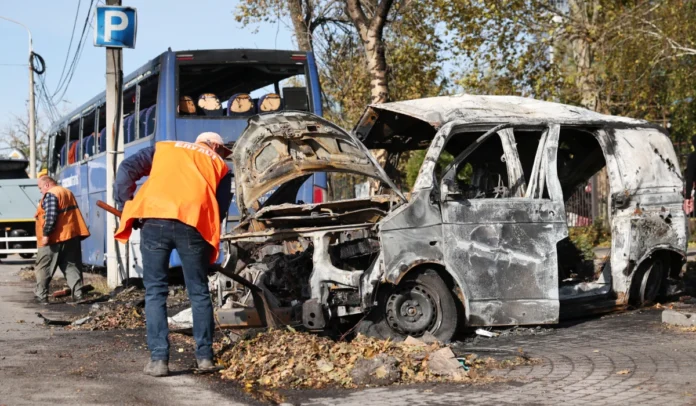
Russian energy attacks on Ukraine’s electricity infrastructure amounted to war crimes and crimes against humanity, a UN-backed inquiry concluded Monday. The investigators said the strikes caused widespread civilian suffering, leaving millions without electricity and heating during freezing winter conditions.
The independent commission presented its findings to a United Nations human rights committee. It examined the effects of Russia’s extensive attacks on Ukraine’s energy system, focusing on civilian experiences during winter 2025–2026. According to commission chair Erik Mose, the attacks deliberately targeted civilian infrastructure.
The resulting power outages created serious difficulties for communities across Kyiv and eight other Ukrainian regions. Older residents sometimes struggled to reach shelters because elevators stopped working during missile and drone attacks. Meanwhile, hospitals faced disruptions that threatened patients relying on essential medical equipment.
Mose, a former Norwegian judge, warned that intensifying attacks ahead of another winter raised serious concerns. The commission said its assessment drew on testimony from 255 Ukrainians who experienced harsh winter conditions. Investigators also consulted government officials, medical professionals and civic organizations.
Based on its findings, the commission concluded that the strikes violated international law. It classified the deliberate attacks against civilian objects as war crimes. Furthermore, it said the suffering inflicted on civilians supported its conclusion that the actions constituted crimes against humanity.
Russia rejected the inquiry’s authority and disputed its conclusions. The Russian mission to the United Nations said Moscow did not recognize the commission’s mandate. It also described the findings as based on what it called falsified data.
Throughout the conflict, Russian officials have maintained that their forces target military objectives or infrastructure supporting Ukraine’s armed forces. However, the commission’s report challenges that position by concluding that the energy attacks intentionally targeted civilian objects.
The inquiry also examined Russia’s recruitment of foreign nationals into its armed forces. Investigators found evidence that men from 29 countries joined through deception or coercion. The commission said it had examined recruitment involving nationals from 48 countries overall.
According to the report, many recruits came from economically vulnerable communities and had limited educational opportunities. Investigators said intermediaries in other countries sometimes presented themselves as legitimate businesses with government backing. These agents arranged travel documents and, in some cases, accompanied recruits to Russia.
After arriving, some men allegedly faced pressure to sign military documents written in Russian. The commission said recruits did not understand the documents’ contents and were shocked to discover their expected military service. Investigators described these practices as deceptive and coercive rather than genuinely voluntary recruitment.
The commission identified recruits from countries across Africa, Asia, Europe and Latin America. Its list included India, Bangladesh, Morocco, Nigeria, the Philippines, Yemen, Uzbekistan, Brazil and South Africa. It also named Azerbaijan, Belarus, Kenya, Tunisia, Turkiye and several other countries.
The report adds to international scrutiny of Russia’s conduct during the war, which began with its full-scale invasion of Ukraine in February 2022. The commission said Russian authorities had not responded to its requests for comment on its reports.
As another winter approaches, the findings highlight the risks facing civilians who depend on reliable electricity and heating. Russian energy attacks remain central to the inquiry’s assessment of alleged violations. The commission’s conclusions place renewed emphasis on civilian protection and compliance with international humanitarian law.
