
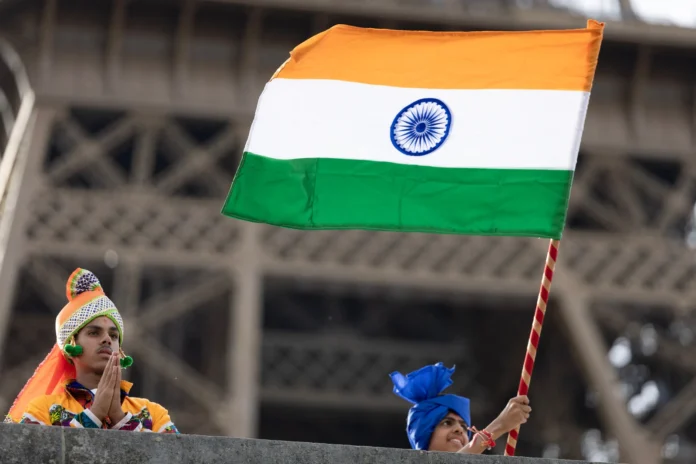
The landmark reopened Tuesday morning after management met with employees following a dispute involving female workers. The disagreement followed a visit by a Hindu religious delegation that requested limited interaction with women.
The Eiffel Tower’s operating company acknowledged that organizers accepted the unusual conditions requested for Saturday’s private visit. Management later said those arrangements should not have been approved under the circumstances.
According to staff representatives, female employees faced restrictions while the delegation visited the landmark. Some workers reportedly left their normal positions, while male colleagues replaced others during the delegation’s presence.
Furthermore, employees said women received instructions to avoid particular areas and limit their movement around the site. Staff members described the situation as deeply troubling and criticized what they considered discriminatory workplace instructions.
The incident prompted employees to close the attraction on Monday while management addressed their concerns. Visitors returned Tuesday morning as normal security procedures resumed around the famous Paris monument.
The religious organization involved later issued an apology for any distress or inconvenience caused by the arrangements. It said the visit involved a large delegation and that organizers worked with Eiffel Tower staff.
The organization also stated that, to its knowledge, nobody faced restrictions preventing access to the monument. It explained that organizers scheduled the visit during normal opening hours to minimize disruption for other visitors.
However, the staff response focused specifically on how female employees experienced the arrangements. Workers argued that asking women to withdraw from their professional duties because of their sex crossed an important line.
Gender equality remains a major principle within French public life, making the dispute particularly sensitive. French officials quickly reacted, with the country’s gender equality minister expressing strong disapproval.
The minister said French society should not require women to remove themselves from public or professional spaces. Her comments reflected wider concerns about whether religious or cultural requests should influence workplace treatment.
Meanwhile, several political figures also criticized the incident as France approaches another presidential election campaign. Candidates from different political backgrounds used the controversy to reaffirm their opposition to restrictions based on gender.
The dispute also coincided with the opening of a major Hindu temple near Paris. The Bochasanwasi Akshar Purushottam Swaminarayan Sanstha, known as BAPS, inaugurated the temple on Sunday.
Its spiritual leader Mahant Swami Maharaj, aged 93, led the consecration ceremony. The organization maintains a large international network of temples and religious centers.
The timing added further attention to the Eiffel Tower dispute, although the organization apologized after the controversy emerged. Officials and political candidates nevertheless continued discussing the broader principles involved.
At the same time, the Eiffel Tower remains one of France’s most recognizable landmarks and attracts millions of visitors annually. Its reopening allowed normal tourism operations to resume after Monday’s closure.
Gender equality concerns will likely remain central to discussions surrounding the incident and the treatment of female employees. The episode has also renewed debate about balancing religious sensitivities with workplace rights.
French political figures emphasized that cultural or religious beliefs should not determine women’s professional roles. Consequently, the dispute has developed into a broader discussion about workplace equality and public institutions.
Overall, the Eiffel Tower reopened after management addressed the immediate staff dispute. However, the controversy continues to raise questions about professional rights, religious accommodations, and equality in France.
