
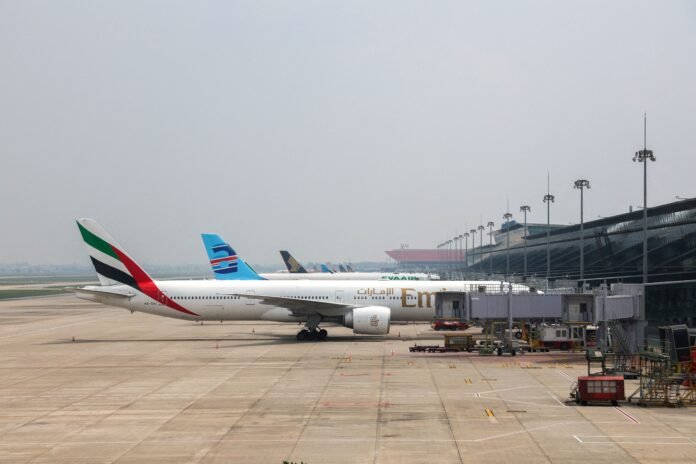
UAE flight disruptions continued Wednesday as major airlines adjusted selected services amid heightened regional security concerns. Emirates, Etihad Airways, Air Arabia, and flydubai continued operating several routes despite ongoing uncertainty. However, several flights faced cancellations or delays involving destinations across the Gulf region. Consequently, passengers received advice to verify flight information before travelling to airports.
Etihad Airways continued selected services between Abu Dhabi and Bahrain, alongside flights connecting Abu Dhabi with Kuwait. However, the airline cancelled several Abu Dhabi-Bahrain services through August 21. Passengers affected by cancellations can receive assistance with alternative travel arrangements through the airline. Meanwhile, scheduled services continue operating on selected routes despite the changing regional situation.
Emirates also adjusted operations between Dubai and Bahrain amid the latest security developments. The airline cancelled two Dubai-Bahrain services while another flight remained scheduled to operate. Information for some Dubai-Kuwait services remained unavailable during the latest operational update. Therefore, passengers should verify individual flight status before travelling to Dubai International Airport.
Emirates has also introduced flexible travel arrangements for certain Dubai-bound passengers affected by disruption. Eligible passengers can change travel dates without additional change fees under measures introduced earlier. Nevertheless, fare and tax differences may still apply depending on individual booking circumstances. Travellers should therefore review their booking information before making changes to planned journeys.
Meanwhile, flydubai reported that services to Kuwait, Bahrain, and Saudi Arabia continued operating. Nevertheless, the carrier encouraged passengers to verify flight information and complete online check-in. It also recommended allowing additional time for airport procedures and potential operational delays. Passengers departing Dubai should arrive at least four hours before scheduled departure.
Several flydubai services also experienced delays during the latest operational period at Dubai International Airport. These included flights connecting Dubai with Beirut and Kathmandu, according to the airline’s update. Consequently, travellers should monitor their flight status before leaving home or beginning their airport journey. Additional delays could emerge if regional security conditions change unexpectedly.
Air Arabia also reported several cancellations involving services between the UAE, Kuwait, and Bahrain. Cancelled flights included services from Sharjah to Kuwait and Sharjah to Bahrain. Another cancelled service connected Abu Dhabi with Kuwait during the latest operational update. Therefore, passengers affected by these cancellations should contact the airline regarding available travel alternatives.
The latest disruptions follow heightened regional tensions involving Iran, the United States, and surrounding Gulf states. UAE authorities said air defenses detected two ballistic missiles launched toward the country Tuesday. Officials said assessments indicated that the missiles targeted maritime navigation rather than population centers. Both missiles fell into the sea, with no reported impact on land.
At the same time, uncertainty surrounding the Strait of Hormuz continued affecting regional transportation planning. Iran has maintained that the strategic waterway will remain closed until certain conditions receive attention. Meanwhile, US President Donald Trump said negotiations with Tehran were not currently underway. Consequently, airlines continue reviewing routes and schedules because regional developments can change rapidly.
International carriers have also adjusted Middle East operations because of continuing security concerns. Several airlines suspended or modified services involving Dubai and other regional destinations. These decisions vary considerably depending on individual security assessments, airspace restrictions, and operational requirements. As a result, passengers travelling internationally may encounter different policies depending on their airline.
Travellers heading toward India should also expect additional airport screening and potentially longer processing times. Enhanced security measures remain in place at several major Indian airports through August 20. Passengers should therefore allow additional time for check-in, baggage procedures, security screening, and boarding. Higher passenger volumes could also contribute to longer airport processing times.
Passengers travelling toward Saudi Arabia should carefully review documentation before beginning their journeys. Saudi aviation authorities have instructed airlines to verify passengers’ required travel documents before departure. Travellers should also confirm entry, exit, and transit requirements when connecting through another country. This precaution can help prevent documentation problems during disrupted regional travel.
UAE flight disruptions remain subject to change as airlines continuously assess security developments and operational conditions. Therefore, passengers should check their airline’s latest flight information before leaving for the airport. Travellers should also allow additional time for traffic, immigration, security procedures, and boarding. Ultimately, preparing for potential schedule changes can reduce complications during regional travel.
