
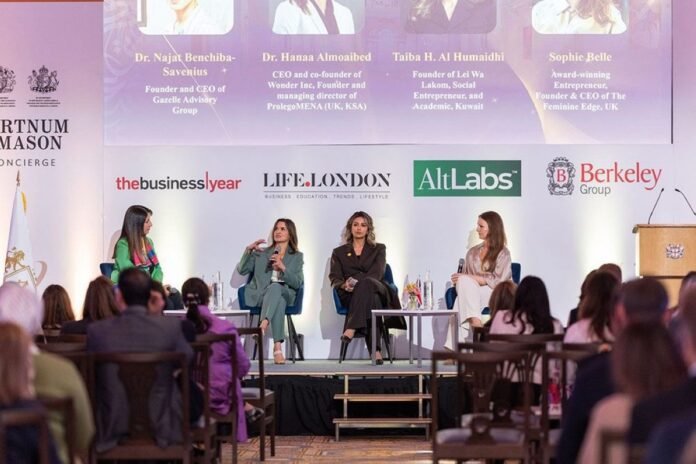
Arab women empowerment stood at the center of discussions during the first Arab Women Week 2026 held in London. The event brought together entrepreneurs, policymakers, and innovators from across the Middle East, North Africa, and the United Kingdom. Organizers aimed to strengthen global connections and highlight the growing role of Arab women in leadership and business.
The Arab women empowerment message shaped many of the sessions throughout the week-long program. Hosted by the Arab Entrepreneurs Board, the event attracted more than a thousand participants. It created a platform for dialogue on entrepreneurship, innovation, and social development. Participants also focused on expanding the global presence of Arab women in decision-making spaces.
Representatives from Kuwait played a visible role in the event. Entrepreneurs Taiba Al-Humaidhi and Sheikha Awatef Al-Sabah joined international panels alongside leaders from different regions. They discussed how women can strengthen resilience in society through education, psychological support, and economic participation. Their contributions reflected the broader goal of Arab women empowerment in modern economies.
During the event, Al-Humaidhi received recognition for her work in financial literacy and behavioral science. She emphasized the importance of simplifying financial knowledge for wider access. She also highlighted how education can improve decision-making, especially for women entering business environments. In addition, she joined discussions on the future of entrepreneurship and sustainable economic growth.
The Arab women empowerment theme also appeared in speeches delivered by Sheikha Awatef Al-Sabah. She focused on leadership development and mental well-being. Her work in coaching and training programs supports women in building confidence and professional skills. She also contributed to panels with diplomats and policymakers on leadership challenges in changing global environments.
Several sessions took place in major London venues, including historic institutions and academic halls. These locations added international visibility to the event. Organizers used the platform to connect Arab entrepreneurs with global networks. They also encouraged partnerships between the UK and the MENA region.
The Arab women empowerment agenda extended beyond speeches and awards. It included practical discussions on business development, innovation, and social impact. Participants explored ways to support young entrepreneurs and expand access to global markets. They also addressed the importance of mental health and resilience in leadership roles.
Arab Women Week 2026 reflected a broader movement toward stronger representation of Arab women in global discussions. The event created opportunities for collaboration and knowledge exchange. It also reinforced the role of women in shaping economic and social progress across regions.
As the program concluded, organizers emphasized continued cooperation between Arab and international institutions. They highlighted long-term goals of supporting entrepreneurship and expanding opportunities for women worldwide.
