
Saudi officials, alongside counterparts from Türkiye and Egypt, are exploring the formation of a consortium to manage oil flows through the strategic waterway. This initiative aims to stabilize global energy trade while addressing disruptions caused by regional conflicts.
Currently, the Strait of Hormuz handles roughly 15 million barrels of oil per day and 5 million barrels of petroleum products, accounting for nearly a quarter of global seaborne oil trade. However, recent instability around Iran has reduced these volumes by an estimated 11 million barrels daily. These disruptions have prompted urgent discussions among Gulf and neighboring countries.
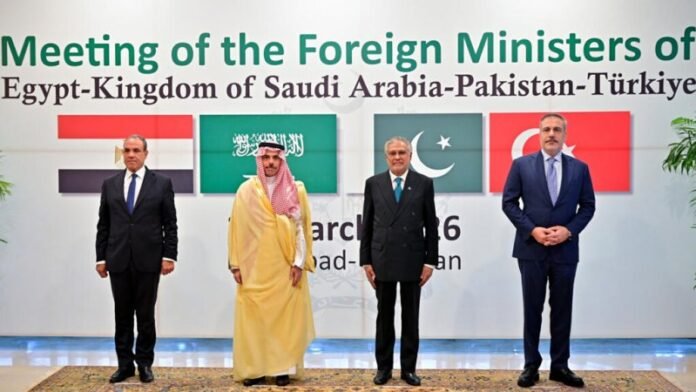
Last week, foreign ministers from Saudi Arabia, Egypt, Türkiye, and Pakistan convened in Islamabad to discuss regional security and the management of the Strait. While Pakistan was considered for participation, officials clarified it would not join the consortium. Nevertheless, Islamabad remains a mediator between the United States and Iran, facilitating preliminary diplomatic engagement.
Saudi Arabia has emphasized that securing the Strait of Hormuz is a top priority. Riyadh is concerned about Iran’s ability to influence shipping routes, as Tehran has restricted passage and imposed fees on some vessels. The kingdom, together with Türkiye and Egypt, is proposing a structured framework, including potential transit fees similar to the Suez Canal model, to ensure reliable oil and gas flows.
The initiative also highlights the economic and strategic stakes of controlling key maritime routes. By forming a consortium, Saudi Arabia seeks not only to protect energy exports but also to strengthen regional influence and mitigate the risks of unilateral disruptions.
As negotiations continue, officials stress that collaboration and coordination are vital. They hope that the Strait of Hormuz framework will support both commercial interests and geopolitical stability. Ultimately, the success of this initiative depends on Iran’s response and broader regional cooperation.
