
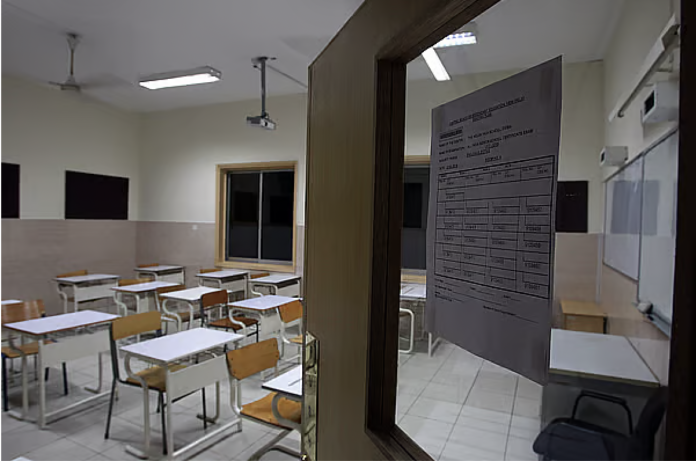
CBSE exam cancellation in Gulf has created uncertainty for thousands of students preparing for board examinations. The Central Board of Secondary Education cancelled Class 10 and Class 12 exams across several Middle Eastern countries due to ongoing regional disruptions. As a result, students and parents now await clarity on how final results will be calculated.
According to the board, the cancelled exams included all Class 12 tests scheduled between March 16 and April 10. The decision affects students studying in Oman, Bahrain, Kuwait, Qatar, Saudi Arabia, United Arab Emirates, and Iran. Furthermore, previously postponed exams in these regions will also remain cancelled.
Earlier this month, the board issued several circulars while reviewing whether schools could conduct exams safely. However, authorities later concluded that the current situation prevents normal examination procedures. Consequently, the board decided to cancel the remaining exams for students in the affected countries.
In addition, the announcement impacts thousands of students across the Gulf. More than 2,000 Class 12 students in Oman prepared for these exams. Meanwhile, around 3,000 Class 10 students also faced exam cancellations earlier.
Although the exams will not take place, the board plans to announce a separate evaluation method. Officials have not yet revealed the final system for calculating results. Therefore, schools, teachers, and families continue to monitor updates closely.
Educators believe the board may adopt an assessment method similar to the system used during the COVID-19 pandemic. At that time, authorities relied on internal assessments, practical marks, and previous academic performance. Such an approach helped authorities declare results despite cancelled exams.
For example, some teachers suggest the board could consider student performance in Classes 10, 11, and 12 when calculating results. This method may ensure fairness while recognizing students’ previous academic efforts.
However, educators note that the current situation differs from the global pandemic disruption. The present cancellation mainly affects Gulf countries and a smaller group of students. Therefore, the board may introduce a slightly different evaluation formula.
Meanwhile, school leaders continue preparing for multiple possible scenarios. Some officials believe moderated internal assessments could determine final marks for Class 10 students. In such cases, schools may submit scores based on past exams and coursework.
Students across the region express mixed reactions following the announcement. Some feel relieved because the situation created uncertainty about exam schedules. Others remain concerned about how universities will interpret results based on internal assessments.
Parents also share similar concerns. Many families recognize the safety reasons behind the decision. Nevertheless, they hope the evaluation system will accurately reflect the hard work students invested throughout the academic year.
Schools have also introduced support programs to help students manage stress. For instance, Indian School Muscat launched a counseling initiative called ISM CareConnect. The helpline offers continuous emotional support for students and parents during this uncertain period.
Ultimately, CBSE exam cancellation in Gulf highlights the challenges education systems face during regional disruptions. Authorities, educators, and families now focus on ensuring fair evaluation methods while supporting students through the transition.
