
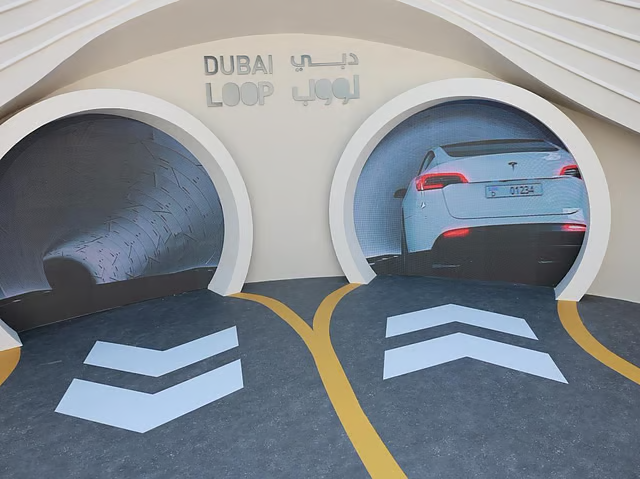
The Dubai Loop tunnel project is moving closer to reality as work on its first phase is set to begin soon. With major investments backing the initiative, officials say the project will serve more than 13,000 passengers each day. Moreover, it aims to change how people move between key city destinations like DIFC, the Dubai Mall area, and Burj Khalifa. This development highlights the city’s push toward smarter, faster, and more sustainable transport options.
Dubai has partnered with the Boring Company to build the underground transport system. Consequently, the new tunnel network will link major commercial, residential, and tourist hotspots. The Roads and Transport Authority signed the agreement with the Boring Company about ten months ago. As a result, planning and preparation now give way to construction. Officials expect the first phase to take one to two years to complete.
The initial route will stretch about 6.4 kilometres and include four stations. These will connect areas such as the Dubai International Financial Centre and the Dubai Mall near Burj Khalifa. Later phases will expand the project to about 22.2 kilometres and include up to 19 stations. This extension will connect the World Trade Centre area with Business Bay and other major districts. Therefore, the project’s first phase will not only improve mobility but also lay the groundwork for broader connectivity across the city.
Officials estimate the first section will cost around Dh600 million. Meanwhile, the full tunnel network may cost up to Dh2 billion once finished. Even so, the construction method the project uses promises lower costs than traditional metro tunnels. By leveraging advanced tunnelling technologies, workers can dig faster, reduce disruptions, and limit impact on roads and utilities. As a result, the system could become a model for cost‑efficient urban transport.
The Dubai Loop tunnel project will use 3.6‑metre‑wide tunnels dedicated to vehicular movement. This design allows vehicles to travel directly through underground segments, reducing surface congestion. Moreover, the method lets tunnelling machines descend smoothly before continuing in long straight paths. This approach increases efficiency while lowering construction time.
City leaders say the system will integrate smoothly with existing transport networks. Therefore, people will benefit from improved first‑ and last‑mile connectivity. In turn, this will help reduce traffic pressure on major roads while giving commuters reliable alternatives. For daily movers between residential and work hubs, the project promises shorter travel time and more flexibility.
Officials also highlight that the system follows global innovation trends in transport. Dubai will become the second city in the world to implement this tunnel‑based transport solution pioneered by the Boring Company. Because of this, the city strengthens its reputation for adopting cutting‑edge technology.
The Roads and Transport Authority says the project fits into wider transport plans announced at recent global forums. Many of those agenda items have already moved from announcement to implementation. Therefore, the Dubai Loop tunnel project reinforces the city’s promise to deliver bold, forward‑thinking infrastructure.
Overall, residents and visitors can expect major changes in how they travel across the city once the Dubai Loop tunnel project enters service. Furthermore, the project underlines Dubai’s commitment to modern, efficient, and sustainable urban mobility. Finally, authorities plan to move quickly to complete the first phase and begin work on subsequent stages soon. With continued investment, Dubai’s transport network will evolve to meet future demand and deliver better journeys for thousands of daily users.
