
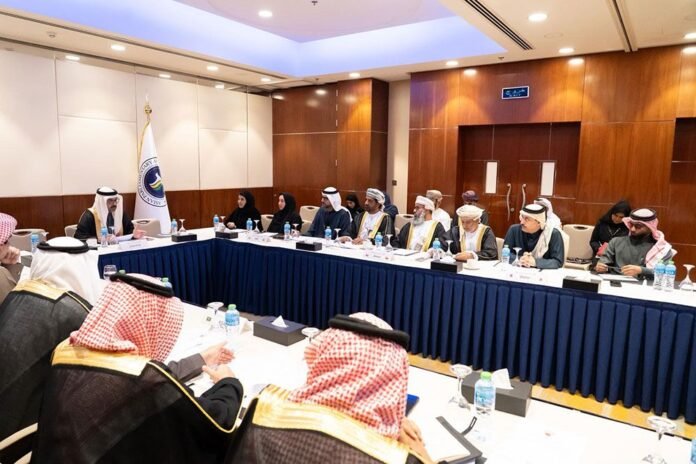
Bahrain strengthened Gulf parliamentary coordination during a high-level legislative meeting held on the sidelines of the Asian Parliamentary Assembly. The meeting brought together representatives from Gulf legislative councils to align positions and address regional challenges. Officials stressed that cooperation remains essential amid rising political and economic pressures.
Ahmed Sabah Al-Salloum chaired the Gulf coordination meeting in his capacity as vice president of the Asian Parliamentary Assembly. He led discussions focused on reinforcing unity among Gulf parliaments. Participants emphasized that regional stability depends on clear communication and shared legislative goals.
Representatives from Bahrain’s legislative bodies also attended the meeting. They highlighted the importance of joint action within regional and international forums. According to participants, fragmented positions weaken Gulf influence on global parliamentary platforms. Therefore, unified strategies remain a priority.
Moreover, attendees discussed current developments affecting the Gulf region. These challenges include political shifts, security concerns, and economic uncertainties. Lawmakers agreed that such conditions require stronger consultation mechanisms. As a result, coordination efforts must continue without interruption.
The meeting also addressed the role of Gulf legislative councils within the Asian Parliamentary Assembly. Participants noted that active engagement improves regional visibility. In addition, it enhances the ability to shape debates on shared interests. Consequently, Gulf parliamentary coordination strengthens collective bargaining power.
Furthermore, officials reviewed administrative and organizational matters related to assembly operations. They stressed efficiency and transparency within parliamentary structures. These improvements aim to support smoother cooperation across legislative institutions. Therefore, administrative alignment complements political coordination.
Attendees also discussed unifying Gulf positions on international resolutions. They argued that shared stances project stability and credibility. In contrast, divided approaches reduce effectiveness. Thus, lawmakers agreed to increase preparatory consultations before major parliamentary sessions.
In addition, participants emphasized the value of experience-sharing among Gulf councils. They highlighted legislative best practices and policy frameworks. Such exchanges help modernize parliamentary work across the region. Consequently, cooperation extends beyond formal meetings.
Officials also stressed that parliamentary diplomacy plays a growing role in regional relations. Legislators increasingly engage in dialogue alongside executive institutions. This approach supports conflict prevention and trust-building. Therefore, Gulf parliamentary coordination contributes to broader diplomatic efforts.
The meeting concluded with a commitment to regular coordination sessions. Participants agreed to maintain communication channels throughout the year. They also pledged to support unified Gulf positions at upcoming international events. This approach aims to protect shared regional interests.
Overall, the meeting reflected Bahrain’s active role in regional parliamentary engagement. It demonstrated a clear commitment to unity, consultation, and strategic alignment. As regional challenges evolve, Gulf lawmakers continue to prioritize cooperation through institutional dialogue and collective action.
