
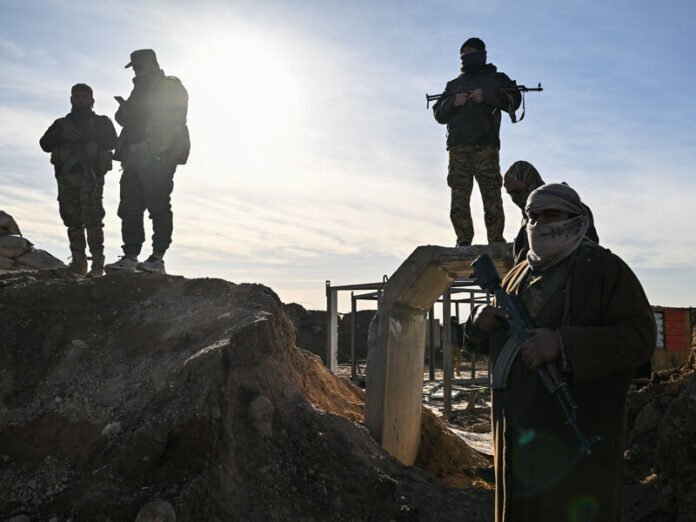
The United States has started a large ISIS detainee transfer from northeastern Syria to Iraq amid worsening regional security conditions. The move follows a recent jailbreak that exposed growing instability across contested areas in Syria. Officials say the operation aims to prevent future escapes and reduce threats to regional security.
U.S. military aircraft moved about 150 detainees from a detention site in Hasakah. Moreover, officials confirmed plans to relocate up to 7,000 detainees in the coming days. These individuals rank among the most dangerous ISIS suspects still held in custody. Consequently, military planners prioritized speed, coordination, and security during the operation.
For years, Kurdish-led forces guarded detention facilities holding thousands of ISIS suspects. However, the situation changed rapidly as Syrian government forces advanced into nearby areas. As a result, pressure mounted on detention centers across northeastern Syria. Earlier this week, a jailbreak allowed around 200 detainees to escape after guards withdrew.
Meanwhile, U.S. defense officials stressed the urgent need for action. They explained that delays could increase the risk of organized breakouts. Therefore, the United States coordinated closely with Iraqi authorities to receive the detainees. Iraq already holds experience managing high-risk extremist prisoners.
According to officials, roughly 9,000 ISIS-affiliated detainees remained in Syria before the transfers began. Some detainees will stay in Syrian facilities under continued monitoring. Still, the current ISIS detainee transfer focuses on those considered most dangerous. Military leaders believe Iraq offers more stable long-term detention conditions.
At the same time, clashes and tension increased near major detention camps. Gunfire forced guards to withdraw from one large camp temporarily. Although a ceasefire later eased tensions, officials remained concerned about repeated violence. Therefore, the relocation plan moved forward without delay.
U.S. commanders emphasized that the mission protects both regional partners and American interests. They warned that any mass escape could allow ISIS networks to regroup quickly. In addition, officials highlighted the importance of preventing detainees from exploiting political transitions in Syria.
Diplomatic pressure also increased alongside military action. U.S. officials encouraged Kurdish forces to coordinate with Syria’s new government. They argued that the original mission against ISIS has largely ended. Consequently, responsibility for security must shift to state institutions.
Observers note that the ISIS detainee transfer reflects a broader change in U.S. regional strategy. Washington now focuses on stabilization rather than long-term military presence. Furthermore, officials believe coordinated transfers reduce chaos during political transitions.
Ultimately, the operation signals urgency and caution. The United States aims to prevent renewed ISIS activity while supporting regional stability. As transfers continue, officials say close cooperation with Iraq remains essential.
