
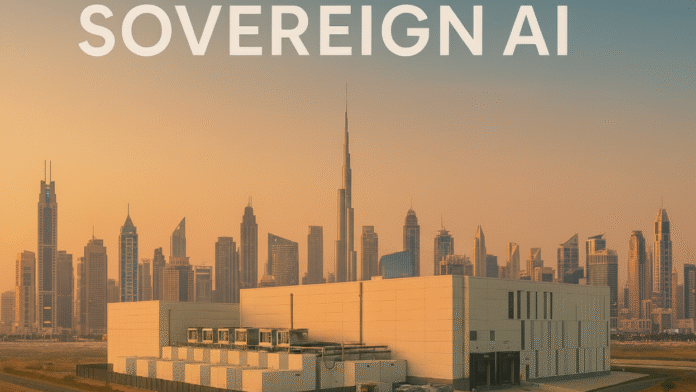
Saudi Arabia is making a bold move in the global AI race by promoting data embassies. These data embassies aim to host foreign countries’ critical data on Saudi soil while remaining under their legal jurisdiction. The government believes these initiatives will strengthen Saudi Arabia’s position in artificial intelligence and data sovereignty.
The concept of data embassies allows countries to store information outside their borders but maintain full legal control. Estonia pioneered this approach in 2017, followed by Monaco, both establishing embassies in Luxembourg. Saudi Arabia wants to expand this idea on a larger scale to attract international investment and technological partnerships.
Officials argue that data embassies provide a creative solution to global AI challenges. By offering locations with abundant resources, including land and solar energy, the country hopes to host secure and efficient data centers. Moreover, these embassies could provide an alternative to European regions facing energy shortages and high operational costs.
The Ministry of Communications and Information Technology emphasizes that data embassies would operate under clear legal frameworks. Saudi Arabia’s draft Global AI Hub Law proposes three types of embassies, ranging from full autonomy to hybrid legal arrangements where courts collaborate with foreign jurisdictions. The law sets the stage for future international agreements on data security.
Despite optimism, experts caution that setting up data embassies will require trust and cooperation. Bilateral treaties and clear legal agreements are necessary to ensure that the hosting country respects foreign laws. Nonetheless, Saudi Arabia hopes to become the first G20 nation to implement a comprehensive framework for these facilities.
In addition, data embassies could bolster Saudi Arabia’s strategy to diversify its economy beyond oil. By positioning itself as a hub for data and AI, the country attracts global tech firms seeking secure and cost-effective infrastructure. Analysts also note that Saudi Arabia’s geographic location offers strategic connections between Europe, Asia, and the Middle East.
However, challenges remain. Cooling large data centers requires water, which is limited in the kingdom. Fossil fuels still dominate the energy grid, raising environmental and sustainability concerns. Experts stress the need to balance sovereignty ambitions with climate and ESG considerations.
Overall, Saudi Arabia’s push for data embassies highlights a bold vision to lead in AI technology. By combining innovation, legal frameworks, and strategic location, the country aims to set a new benchmark in data sovereignty. The success of these data embassies could reshape the region’s role in the global tech economy and demonstrate the kingdom’s growing influence in AI development.
