
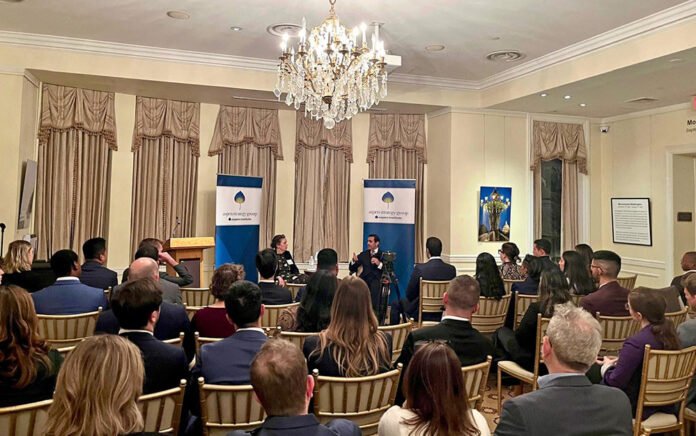
The Embassy of Bahrain in Washington hosted a policy dialogue that highlighted the value of strategic regional dialogue in shaping current international discussions. The session took place in partnership with the Aspen Institute for Strategic Studies. The gathering aimed to exchange insights, explore regional developments, and deepen understanding between policymakers and experts. Moreover, the Embassy used the event to reinforce the importance of strategic regional dialogue in advancing shared goals across borders.
The Bahraini Ambassador to the United States joined the session and offered detailed perspectives on several major topics. He reviewed the outcomes of the recent Manama Dialogue Forum and explained Bahrain’s continued commitment to open discussions across the region. He stressed that Bahrain encourages active engagement because strong communication supports long-term stability. Furthermore, he highlighted growing interest from American officials who attended this year’s Manama Dialogue, which added greater depth to the conversations.
He also discussed the Gateway Gulf Forum, which has become an important platform for global investors. The forum attracted leaders who examined new economic prospects in Gulf markets. The ambassador noted the announcement of more than 60 investments and strategic agreements worth over 17 billion dollars. He explained that Bahrain continues to attract global attention because the country offers economic resilience and a diverse growth model. He added that Bahrain’s open environment positions it as an ideal entry point for investors seeking direct access to a 2.3-trillion-dollar regional market.
Additionally, he reviewed progress made within the Comprehensive Security Integration and Prosperity Agreement, known as C-SIPA. He described the agreement as a significant milestone that connected Bahrain, the United States, and the United Kingdom around three main pillars. These pillars include security cooperation, economic security, and technological resilience. He emphasized that these elements support stability, encourage innovation, and strengthen long-term prosperity. He also stressed that collective action must remain central to regional cooperation efforts.
Throughout the discussion, participants explored how regional partnerships can produce practical solutions for shared challenges. They examined ongoing security needs, economic shifts, and technological developments. They also identified new opportunities to build stronger ties between Bahrain and its partners. Consequently, the session offered a clear roadmap for future collaboration.
The event strengthened Bahrain’s presence in Washington and highlighted the country’s active diplomatic approach. The embassy also used the platform to promote new forms of engagement and to encourage continued cooperation. Ultimately, the discussion reinforced the power of strategic regional dialogue and its ability to guide policies that shape a more stable future.