
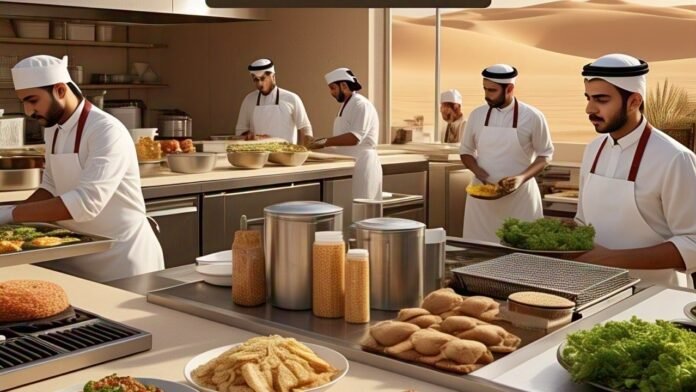
Saudi Arabia’s food scene is undergoing a rapid transformation, driven by cloud kitchens and digital-first restaurants. Cloud kitchens in Saudi Arabia are reshaping how entrepreneurs serve customers and scale their businesses efficiently. The model allows operators to maximize space, cut costs, and expand into new segments without opening traditional restaurants.
Faris Al-Turki, founder of Faris Breakfast, converted his morning-only restaurant into a full-time cloud kitchen. “We invested heavily in the branch, but it sat idle most of the day,” he explained. “Why not use it to launch virtual brands and serve different meals to new audiences?” This approach increases revenue while keeping fixed costs low, highlighting the flexibility of cloud kitchens in Saudi Arabia.
Marketing plays a crucial role in cloud kitchens. Al-Turki added, “You have no physical store or street visibility. Customers discover your brand mostly in apps.” Paid ads, influencer campaigns, and app placements are now essential for survival.
Some operators skip physical space entirely. Dubai-born foodtech platform Kaykroo entered Saudi Arabia in 2021 and now runs over 77 digital-first brands across Riyadh, Jeddah, and Dammam. “Owning the full platform lets us scale quickly while tailoring brands to local preferences,” said Fawaz Al-Otaibi, co-founder and KSA CEO. Kaykroo combines culinary R&D, logistics, and data analytics to optimize performance and maintain customer loyalty.
For young entrepreneurs, cloud kitchens provide low-risk opportunities. At 18, Kenzy Al-Harbi launched Earth Art, a delivery-only brand in Madinah focused on high-end comfort food. “The model is much cheaper than traditional restaurants. I could test ideas without a large investment,” she explained. Visual branding, social media, and storytelling helped build recognition despite the lack of a storefront.
However, platform commissions and visibility costs remain challenging. Operators must optimize menus, create offers, and track sales carefully. “Customers want variety, speed, and convenience,” Al-Turki said. “You must adapt constantly — from marketing to kitchen workflows.”
As competition grows, questions about regulation, consolidation, and long-term sustainability emerge. Experts expect strong operators to thrive, while weaker ones will consolidate or exit. Al-Harbi advises new founders: “Start small, focus on quality, and improve constantly.” Al-Turki adds, “Staying visible and relevant is a constant fight, but the opportunity is real.”
Overall, cloud kitchens in Saudi Arabia are redefining the food business, proving that success now depends on speed, creativity, and digital strategy. Entrepreneurs who adapt quickly will dominate the delivery-driven market. Cloud kitchens in Saudi Arabia are not just a trend — they are the future of the Kingdom’s food industry.
