
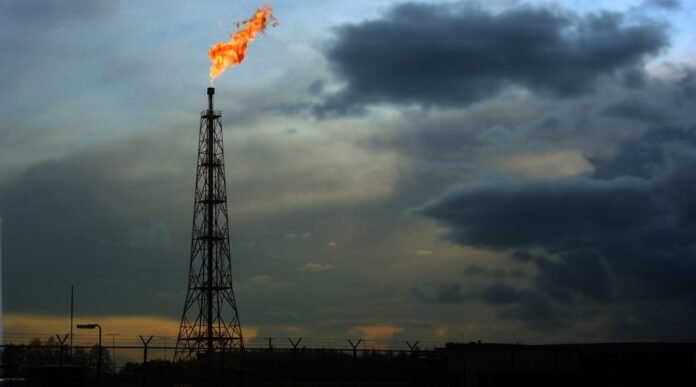
Iraq is taking a significant step in energy efficiency with Baker Hughes, focusing on flare gas recovery at the Bin Umar plant. The flare gas recovery project promises to reshape the country’s energy landscape.
Baker Hughes and Halfaya Gas Company signed an agreement to install an advanced flare gas recovery system. The project targets capturing up to 300 million cubic feet of gas each day. Experts estimate this will produce around 32 billion kilowatt hours of energy annually. Consequently, the initiative will generate electricity while reducing environmental harm.
The recovered gas will undergo processing into dry gas, liquefied petroleum gas (LPG), and valuable condensates. These products will serve domestic industries and support export opportunities. In addition, the project strengthens Iraq’s energy security.
Earlier studies laid the groundwork for this development. Engineers and planners used data from prior designs to optimize the system. This effort aligns with Iraq’s broader strategy to reduce routine flaring and minimize emissions. By capturing gas that would otherwise burn off, the country makes measurable environmental gains.
Halfaya Gas Company manages the project, operating under a 15-year agreement with South Gas Company, part of Iraq’s Oil Ministry. The contract ensures long-term collaboration and continuous improvements. Moreover, the partnership brings modern technology and international expertise into Iraq’s energy sector.
Transitioning to cleaner energy has gained urgency in recent years. Iraq faces both growing domestic energy demand and global expectations to reduce carbon output. The flare gas recovery project addresses both challenges simultaneously. By capturing gas, converting it to useful products, and limiting flaring, Iraq advances its environmental and economic goals.
Officials highlight that flare gas recovery offers multiple benefits. It lowers greenhouse gas emissions, supports industrial growth, and enhances energy export potential. In addition, the project creates new jobs and encourages knowledge transfer between local engineers and international experts.
This development demonstrates Iraq’s commitment to modernizing its energy infrastructure. As Baker Hughes and Halfaya Gas Company proceed, the project will serve as a model for other facilities nationwide. The flare gas recoveryinitiative not only conserves energy but also sets a standard for sustainable oil and gas practices.
Industry observers note that this collaboration marks a milestone in Iraq’s journey toward efficient and environmentally responsible energy production. With continued focus and investment, the country could see similar projects expanding across key oil fields.
Ultimately, the Bin Umar flare gas recovery program represents a strategic leap forward. By combining technology, expertise, and policy, Iraq strengthens its energy security and environmental stewardship. The flare gas recovery system will likely influence national energy planning for decades to come.
