
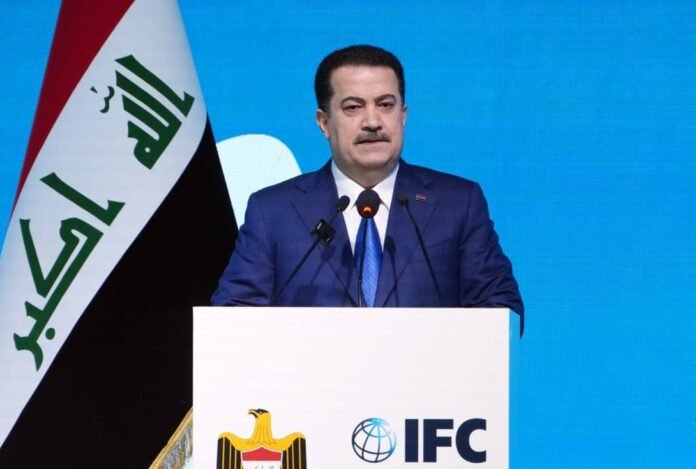
Baghdad signed new agreements on Saturday, securing $1 billion in IFC investment in Iraq. These deals aim to boost energy, agriculture, infrastructure, and finance sectors across the country. The announcement coincided with a ceremony marking 20 years of IFC operations in Iraq.
During the event, officials emphasized that IFC investment in Iraq represents a crucial step toward economic growth. Prime Minister Mohammed Shia al-Sudani highlighted the role of the private sector in delivering projects despite bureaucratic delays, corruption, and security concerns.
One of the major agreements allocates $500 million to develop associated gas recovery and construct gas facilities in Basra province. This investment seeks to reduce the routine flaring of natural gas during oil extraction. Additionally, IFC investment in Iraq includes initiatives in trade, housing, and health sectors, signaling broad ambitions beyond hydrocarbons.
Economists argue that Iraq’s economic recovery remains fragile. Although oil revenues dominate the economy, government officials aim to strengthen agriculture, financial services, and infrastructure. The IFC has actively operated in Iraq since 2005, mobilizing over $2.5 billion for development projects during turbulent years.
However, challenges persist. Corruption and mismanagement continue to disrupt projects, siphoning billions from public funds. Citizens face failing services, from electricity and water to healthcare. Transparency International repeatedly ranks Iraq among the world’s most corrupt countries, while watchdog groups document how political elites control ministries and contracts for personal gain.
Even during the signing ceremony, officials admitted that bureaucratic obstacles and corruption affect project implementation. Critics warn that new IFC investments risk being trapped in inefficiency and patronage unless structural reforms occur.
While Baghdad celebrates these billion-dollar deals, the Kurdistan Region remains largely excluded. No commitments indicate that any portion of the new IFC package will reach Erbil or Sulaimani. Most contracts, including the Basra gas initiative, focus on southern federal companies and central institutions. This omission highlights ongoing federal neglect and stalled revenue-sharing with the Kurdistan Region.
In conclusion, IFC investment in Iraq offers hope and signals potential economic progress. Yet entrenched corruption and unequal distribution challenge the ability to turn investments into tangible improvements for citizens. Ordinary Iraqis still face poor infrastructure, limited public services, and uncertainty about whether international capital will benefit their regions.
