
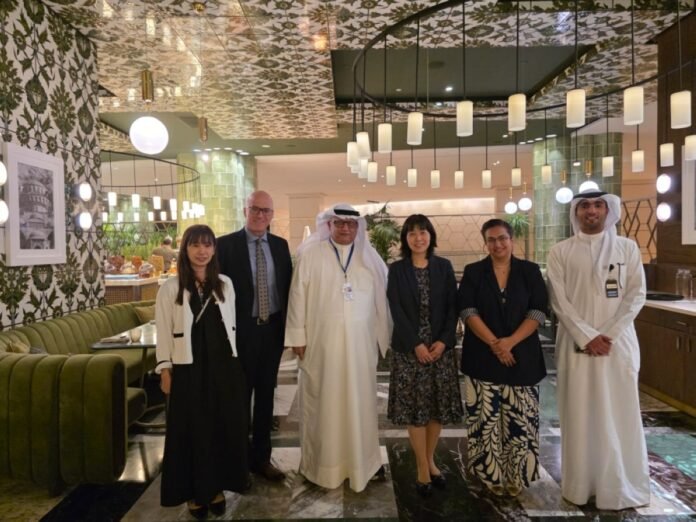
Japan’s Foreign Minister visited Kuwait this week. Takeshi Iwaya attended a key ministerial meeting. This Japan-GCC meeting started a new engagement chapter. Kuwait currently chairs the Gulf Cooperation Council. This was the first meeting since 2023. Consequently, it marks a significant diplomatic step. A Japanese official discussed the visit’s importance. Deputy Press Secretary Kaneko Mariko spoke with the press. She said the trip shows Japan’s strong commitment. It aims to deepen cooperation with GCC nations.
Moreover, Japan and Kuwait share fundamental values. These include a free international order. This order is based on the rule of law. Minister Iwaya held high-level meetings in Kuwait. He met with the Crown Prince. He also met with the Prime Minister. Discussions covered many important topics. Energy cooperation was a central theme. Water security was another key point. Infrastructure development was also discussed. Furthermore, they talked about regional issues.
Energy remains the cornerstone of their relations. Kuwait is a crucial stable energy partner for Japan. Actually, it is Japan’s third-largest crude oil supplier. Japan expressed deep gratitude for this relationship. Tokyo also wants to support Kuwait’s future. It will use its advanced technology for this. This includes renewable energy projects. It also includes electricity generation. Additionally, it covers water desalination.
Water security is a vital regional concern. Japanese companies possess excellent technology. They can help ensure a stable water supply. This dialogue shows progress in bilateral ties. Beyond economics, Japan cares about regional security. Maritime stability is a shared interest. Japan has a long-standing naval presence nearby. It conducts anti-piracy operations there. No new Kuwait defense deals were signed however.
The humanitarian crisis in Gaza was also addressed. Minister Iwaya reiterated Japan’s firm position. He supports a two-state solution strongly. Japan provides continued assistance to Palestinians. It has given billions in aid since 1993. Recent humanitarian aid is also significant. Japan’s approach has four key principles. These principles guide its support efforts.
Finally, the warm friendship between the nations continues. Kuwait gave vital aid after Japan’s 2011 earthquake. Cultural exchanges are also growing. Kuwait’s pavilion at Expo Osaka is very popular. Japan will also review its visa procedures. It wants to encourage more Kuwaiti visitors. Therefore, this visit strengthened a multifaceted alliance. It reaffirmed Kuwait’s role as a stable energy partner and more. This stable energy partner relationship continues to evolve.
